
Pipe Repair
The plumbing system in your home is a complex network of pipes, valves, and lines that work together to deliver clean water and remove waste. Most of the time, these pipes are out of sight and out of mind, hidden behind walls, under floors, or buried underground. However, when a pipe fails, it quickly becomes the center of attention. At Haltom City Plumbing Co, we specialize in comprehensive pipe repair, pipe installation, and main water line services. We are dedicated to maintaining the integrity of the plumbing infrastructure for residents and businesses throughout Haltom City.
Pipe repair in Haltom City, TX for slab leaks, bursts, and low pressure
Hearing water in a wall? Call (817) 214-2167 before the stain spreads.
Pipe repair in Haltom City, TX often starts with water in a wall, a burst after a freeze, low pressure at every faucet, or a suspected slab leak. If you searched for a pipe repair plumber near me, we take those calls in Browning Heights, Meadow Oaks, Diamond Oaks, Fossil Springs, and High Pointe. We handle leak repair, slab leaks, and repiping in houses, townhomes, and condos, and we come out 24/7 when water is already in the floor or the wall. The Contact page has the shop number and address.
We start at the shutoff, then we find out whether this is a short repair, a buried line, or a house that’s asking for a repipe. If the house is already wet, the tank is involved, or a drain is backing up too, tell us on the call. We can often handle emergency plumbing, water heater repair, or drain cleaning on the same visit when the leak isn’t the only problem in the house.
- OUR PROCESS
What to Expect When You Call for Plumbing Service
From the first call to the final check, Haltom City Plumbing Co keeps the plumbing service process simple, clear, and focused on solving the problem correctly.
1. Schedule Your Plumbing Service
Tell us what’s going on and choose a convenient time for your plumbing repair or service.
2. Inspection & Professional Repair
We inspect the issue, explain the recommended solution, and complete the necessary plumbing repair or installation.
3. Final Testing & Quality Check
We test the plumbing system, check our work, and make sure everything is operating properly before we finish.
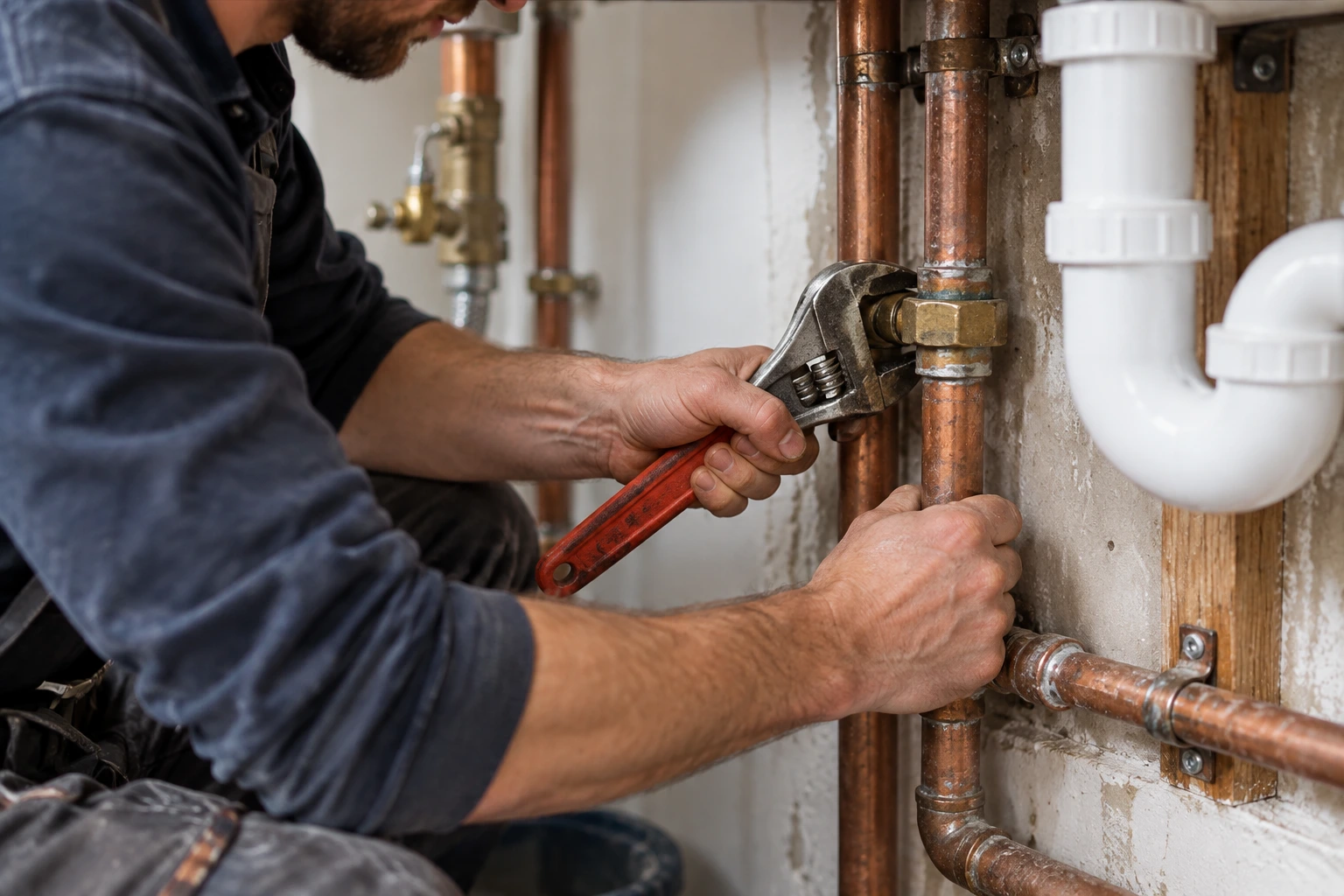
What to do first when a Haltom City plumber gets a leaking pipe
Close the house shutoff if water is running in a wall, under the floor, or from a burst pipe, and keep people off the wet area.
If you can hear water and you can’t see the leak, the house valve is still the first move. Don’t cut a wall or a floor before the water is off, and don’t use a torch on a frozen line.
Safe checks you can make
These checks help us bring the right fittings and decide whether to isolate one run or the whole house.
- Close the house shutoff, then see whether the leak stops and whether the meter is still moving.
- Note whether the water is hot, cold, or both, and which rooms are wet or noisy.
- Look at the water heater pan and the T&P line, so a tank leak isn’t mistaken for a pipe leak.
- Open cabinets under sinks and at the heater so we can see supplies before we arrive.
- If a line is frozen, leave the faucet open and get room air to the pipe. Don’t use a torch.
What to leave alone on a leaking line
Some first tries make a small split into a flood, or hide the leak we need to find.
- Don’t tape a burst and turn the water back on.
- Don’t cut drywall or flooring to hunt for the leak.
- Don’t force the meter stop if the house valve already closed the system.
- Don’t use a torch, a heat gun on high, or boiling water on a frozen fitting.
- Don’t keep running irrigation or hose bibs if you’re trying to watch the meter for a leak.
The house valve versus the meter
The house shutoff stops water to the fixtures. The meter tells us whether water is still leaving the system once those fixtures are off.
If the house valve holds and the meter is still, the leak is on the house side and we’ve already stopped the water. If the meter still turns, the leak may be on the buried run between the meter and the house, and that line has to be isolated separately.
Pipe problems we repair
Slab leaks, burst pipes, low pressure, pinhole copper, and whole-house repipes each get a different first test, and the lists below are what customers usually see first.
Slab leaks under the floor
If it’s a slab leak, the first signs are often a warm floor, a wet baseboard, the sound of water with every fixture off, or a meter that keeps turning.
We isolate the hot and cold runs, listen, and locate before anyone cuts a floor. A short failed section can sometimes be repaired or rerouted. A line that’s already thin in several spots is a reason to talk about a larger repair, not a reason to keep patching blindly. We won’t treat a higher water bill alone as a slab leak until the visible uses have been checked.
What you might notice first at the pipe
- A warm strip in the floor when the rest of the room feels cool.
- The meter moving with every faucet off.
- A sudden jump in the water bill and no dripping faucet in sight.
- A soft or stained area along a baseboard.
- The sound of water under the floor after the house is quiet.
Burst pipes and poorly insulated runs
A burst pipe usually shows up as a spray in a garage, a crawl, a cabinet, or an exterior wall after the line thaws or after a fitting lets go.
Close the house shutoff, then stay off the wet floor. We cut out the failed section, repair it with the same or a compatible material, and pressure-test the run. Poorly insulated pipes in garages and at hose bibs are the ones that split on hard freeze nights, and we look at the rest of that run so the next cold snap doesn’t open a second split.
Frozen pipe repair after a hard freeze
A frozen pipe may still be closed, or it may already be split in a way you only see once the ice lets go.
Leave the faucet open, get room air to the pipe, and don’t use a torch. We thaw with controlled heat, then we inspect the run for a split. If the pipe has already burst, the water stays off until the repair is in and tested. Freeze damage is one of the after-hours calls we take in winter.
Leaking pipes in walls or ceilings
A leak in a wall or ceiling can stain the finish, soften drywall, or drip into a cabinet while every faucet still looks dry.
We shut the water off, open a small inspection point if we need to see the pipe, and pressure-test the section. A supply leak and a drain leak leave different stains, and we treat them differently. Once the failed section is found, we repair it and check the finish path so hidden moisture isn’t left behind the wall.
Low water pressure from scaled or narrowed pipe
Whole-house low pressure is often narrowed galvanized pipe, a failing pressure reducing valve, or a partially closed stop.
We measure at a hose bib and at an inside faucet so we can tell a house-wide problem from a single fixture. Scale can coat the inside of older lines, and mixed galvanized and copper is a common pattern in older houses here. A single fixture with low pressure is usually the aerator, the cartridge, or the local stop, and that visit may move to fixture installation.
Pinhole leaks in copper pipes
A pinhole in copper often starts as a green stain, a small drip, or a wet spot on a ceiling below a run.
One pinhole in copper that’s otherwise in good shape is often a short repair. Two or three pinholes on the same run are a reason to look at the rest of the copper before we close the wall. We cut out the failed section, join it cleanly, and pressure-test before the finish goes back.
Water line repair on the run to the house
A leak between the meter and the house will move the meter even when every fixture is off, and you may see a wet yard, a soft trench line, or a sudden drop in pressure.
We isolate that buried run, locate the leak, and repair or replace the failed section. If the rest of the line is already brittle, a longer replacement can be the cleaner path. We pressure-test before the soil goes back.
Repiping houses with mixed pipe
A repipe is the visit we talk about when patches are only buying time on mixed or failing material.
Older houses here often have mixed galvanized and copper, and later additions may already be PVC or PEX. We don’t assume the pipe is new because the kitchen looks updated. Pipe materials follow the decade, and we open enough of the system to show you what’s actually in the walls before anyone plans a whole-house repipe.
If you think it might be a slab leak, call (817) 214-2167 and leave the water off.
Repair one section or repipe the house
We explain a short repair versus a repipe after the tests, not before, and the condition of the rest of the pipe is the deciding fact.
When a short repair is enough
A single burst, a single pinhole, or a short failed section on otherwise sound pipe is a repair.
We cut out the failure, join the new section, and pressure-test the run. If the camera or the opened wall shows the rest of the line is still in good shape, we stop there.
When the house is asking for a repipe
A repipe makes more sense when two or three leaks have already shown up on the same material, when pressure is low throughout the house, or when a repair would only leave the next thin section in the wall.
We’ll show you the failed section and the rest of the material before anyone talks about opening more walls. You can choose a repair that holds for now, and we’ll be honest about how long that is likely to last.
What a repipe visit looks like
A repipe is planned work. We map the runs, protect floors, and replace the failing lines with a material that fits the house and the fixtures already in place.
Water is restored in stages so a kitchen or a bath can come back on as sections are tested. We pressure-test the new work and cap or abandon the failed runs so they can’t leak again in the wall or under the floor.
What we ask on a pipe visit
On the first call we ask where you see or hear water, whether the house shutoff is already closed, and whether the meter is still moving.
A photo of the wet area and the shutoff helps us load fittings, a locator, and repair pipe. We locate the failure while we’re there, and we make the leak repair on that visit when we can reach the pipe and the fittings are already on the truck. A burst in a garage or a cabinet is often repaired in that visit. A slab leak, a buried line, or a repipe may need a follow-up once we’ve located the failure and agreed on the plan. If water is already in a hall at night, emergency plumbing is the right path.
Why pipes here leak and split in winter
The soil here is expansive clay common in this part of Tarrant County, which swells when wet and shrinks when dry, and that movement stresses buried lines and the pipe under a slab.
Hard freeze nights split poorly insulated pipes in garages, at hose bibs, and along exterior walls. Those two conditions are why we ask about a warm floor in summer and a quiet burst after a freeze, and why we inspect more than the one fitting that just opened.
Pipe repair and slab leak cost in Haltom City
Pipe and slab leak costs in Haltom City depend on access and on how the house is built. Expansive clay in this part of Tarrant County can stress buried lines, and many post-war ranches still have galvanized or copper that fails in a wall, a slab, or a poorly insulated garage line after a freeze.
| Service | Typical cost in Haltom City |
|---|---|
| Minor pipe repair | $200 to $500 |
| Pipe section replacement | $400 to $1,500 |
| Burst pipe repair | $300 to $1,500 |
| Leak detection | $200 to $600 |
| Slab leak detection | $250 to $600 |
| Slab leak repair | $1,500 to $4,500 |
| Full repipe, smaller home | $3,000 to $8,000 |
| Full repipe, larger home | $6,000 to $15,000+ |
These figures are typical ranges for Haltom City and the DFW area, not a final bill. The final price depends on the problem, the parts, how hard the work is to reach, and whether the call is after hours. We diagnose on site and give you the number before any repair starts.
A wider cost list is on our plumbing cost in Haltom City page. If you hear water in a wall or the meter is spinning, call (817) 214-2167.
Questions about slab leaks, pressure, and repipes
These questions cover leaks under the floor, water in a wall, frozen pipes, low pressure, and when a house needs a repipe.
What do you check first when it might be a slab leak in Haltom City?
If it might be a slab leak in Haltom City, we start at the house shutoff and the water meter, because a meter that still turns with every fixture off means water is leaving the system somewhere. Then we listen and look for a warm floor, a wet baseboard, or a soft spot. If it looks like a slab leak, we isolate sections so we can tell whether the leak is on the hot side, the cold side, or the line into the house. We don’t cut a floor until those tests point to a location.
Why is there water in a Haltom City wall when every faucet looks dry?
A leaking pipe in a wall can run down the inside of the finish and show up as a stain, a soft spot, or a damp baseboard while every faucet still looks dry. We cut the water, open a small inspection point if we need to see the pipe, and pressure-test that section. Supply leaks and drain leaks leave different stains, so we treat each one on its own terms.
Does a Haltom City water bill that went up with no leak visible mean a slab leak?
It can, but it can also be a toilet that silently runs, an irrigation leak, or a dripping T&P line at the heater. We check those visible uses first, then watch the meter. If the meter moves with the house off and the irrigation off, we look under the floor and along the buried line into the house. A higher bill alone is not a diagnosis, and we won’t treat it as one.
Can a Haltom City slab leak wait a few days once the water is off?
Once the water is off, the leak isn’t adding more water under the floor, and that buys time to test and plan the repair. It doesn’t undo water that’s already there, and it doesn’t mean the pipe can be turned back on in the morning. If you can stay off the water, we’ll use that window to locate the leak and explain a patch or a reroute. If you can’t stay off the water, we isolate the failed run so the rest of the house can be used.
What should I do for a frozen Haltom City pipe before a plumber arrives?
Leave the faucet open on the affected line so thawing water has somewhere to go, and open the cabinet so room air can reach the pipe. Don’t use a torch, and don’t pour boiling water on a frozen fitting. If a pipe has already burst, close the house shutoff and keep people off the wet floor. We thaw with controlled heat, then we inspect the run for a split that only shows once the ice is gone.
Why do I have low water pressure in a whole Haltom City house after years of normal flow?
Whole-house low pressure is often narrowed galvanized pipe, a failing pressure reducing valve, or a partially closed stop, and we test in that order. Scale from hard water can also coat the inside of older lines. A single fixture with low pressure is usually the aerator, the cartridge, or the local stop. We measure at the hose bib and at an inside faucet so we can tell the house line from a single fixture.
When does an older Haltom City home need repiping instead of more patches?
A repipe makes more sense when two or three leaks have already shown up on the same material, when pressure is low throughout the house, or when a repair would only leave the next thin section in the wall. Mixed galvanized and copper is a common pattern in older houses here, and those joints fail at different times. We show you the failed section and the rest of the material before anyone talks about opening more walls. One pinhole in copper that’s otherwise in good shape is still often a short repair.
How long does a buried Haltom City water line repair take on the run to the house?
A straightforward repair on the buried line, once we’ve located the leak, often fits in a visit if the pipe is reachable and the rest of the run is sound. It takes longer if the line is under a drive, if we have to replace a longer section, or if the shutoff at the meter is part of the job. We isolate the line, make the repair, pressure-test it, and restore the soil or the surface we opened. We won’t invent a clock before we’ve seen the run.
How much does pipe repair cost in Haltom City?
Typical pipe repair in Haltom City runs about $200 to $1,000, and slab leak repair often falls between $1,500 and $4,500. A short repair on an exposed pipe is the smaller job. Buried lines and whole-house repiping cost more because of location, access, and material. We give a price after we locate the leak.
Is a burst pipe an emergency?
Yes, if water is still running into a wall, ceiling, or floor. Close the house shutoff first, then call. A burst that is already contained by a closed shutoff can often wait for a scheduled visit, but active flooding, especially near electrical, needs a same-day response.
How do I know if it is a slab leak or something else?
The clearest signs are a warm spot on the floor, a water meter that keeps moving with everything off, or a sudden water bill jump with no visible dripping fixture. A running toilet or an irrigation leak can look similar at first, which is why we check those before assuming the slab.
What causes pipes to burst in Haltom City winters?
Poorly insulated pipe in garages, attics, and exterior walls is most at risk when temperatures drop fast overnight. Water expands as it freezes, and a fitting or a thin section often splits under that pressure. The break usually is not visible until the ice thaws and water starts moving again.
How do I shut off the water to my house in an emergency?
Look for the main shutoff where the water line enters the house, often in a garage, a closet, or a curb box near the meter. Turn it clockwise to stop the water, then open a tub faucet to relieve pressure. If the valve will not turn or you cannot find it, call and we will help you locate it when we arrive.
Can I repair a pipe leak myself?
A small, accessible drip on a visible supply you can shut off may be tempting to patch, but a clamp on a corroded line often fails, and a slab or in-wall leak is not a DIY job. Shut the water off, keep people away from wet electrical areas, and call so we can find the actual break before more of the pipe is damaged.
How do plumbers find a leak without tearing up the whole floor?
We start with the meter, pressure, and what you can see or hear, then use leak detection to narrow the spot before anyone talks about opening a slab or a wall. The goal is to locate the break first. Cutting comes after we know where the water is actually leaving the pipe.
Does homes and businesses insurance cover slab leak repair in Haltom City?
Coverage depends on the policy and on what failed. Some policies help with the damage a slab leak causes, while the pipe repair itself may be treated differently. Check with your insurer before assuming coverage, and ask us for a written description of the leak location and the repair if you plan to file a claim.
When a line in this house is already leaking
A slab leak, a burst pipe, low pressure, or a house that’s heading toward a repipe is a regular call here. We’ll start at the shutoff, then tell you whether a short leak repair or a larger repiping plan is the honest next step.
For pipe repair in Haltom City, call (817) 214-2167.
Service ZIPs: 76117, 76111, 76137, 76148, 76180
- NEED PLUMBING HELP?
Plumbing Problem? Call Haltom City Plumbing Co Today
From clogged drains and leaking pipes to water heaters, sewer lines, and emergency plumbing, our team provides reliable plumbing service for homes.